Friday, 16 April 2010

Is This the Katrina Kaif of Handmaiden Moths?

Handmaiden Moth Euchromia polymena (Linnaeus, 1758) (synonym : Euchromia elegantissima Wallengren, 1861) EUCHROMIINI , CTENUCHINAE , ARCTIIDAE. Photographed in my local wetland patch ('Ketha'), Bomiriya, Sri Lanka. This was photographed using Canon EOS 40D with Canon 100mm f2.8 Macro lens. Handheld and no flash. ISO160, 1/100, f5.6.

Wednesday, 14 April 2010

Birding in Style

I guided a 15-day Birding in Style tour last December. It was with Stephen Lowe—a serious birder from the UK, and his non-birding family: his wife, Andrea (from the US); and two daughters, Ali and Christy, who are studying in Edinburgh, and Cambridge Universities, respectively.

The endemic Layard's Parakeet photographed using Canon EOS 40D  fitted with Canon EF 100-400mm f/4.5-5.6 lens

Being a family birding trip with an influential lobby of non-birders, our birding was limited to walks in and around the bird-rich hotel gardens, and few visits to several key birding sites. Most of these were done while the girls enjoyed the beaches, infinity pools, spas and dining experiences at specialty restaurants. Therefore, this was very different to my Absolute Birding tour—in which we would spend most daylight hours birding as a group to see as many target birds as possible.

Infinity pool at Heritance Kandalama

In serving the wider interest of the family, we excluded a couple of key birding sites, namely, Kithulgala and Udawalawe National Park; instead included four nights at the beach to start proceedings. While the girls enjoyed the beach, Steve and I squeezed in a visit to the endemic hotspot, Sinharaja rain forest spending there two nights. Leading several a hardcore birding trips to this forest earlier in the season, I was fresh from field experience, and was in top form like a batsman with good match practice. That really helped in making quick work of the target birds.

The endemic Dull-blue Flycatcher photographed using Canon EOS 40D  fitted with Canon EF 100-400mm f/4.5-5.6 lens

In the end, we managed to see a tally of 224 species of birds, and to Steve's surprise, all thirty-three endemic species of birds currently recognised! It was quite an achievement, considering that we did not visit the endemic hotspot Kithulgala—a site regularly visited on most organised bird watching tours. On serious birding trips we'd normally spend two nights at Kithulgala and three nights at Sinharaja—as longer time improves our chances of raking our target species in these lowland rain forest areas (situated in the only aseasonal ever-wet region of the whole of South Asia), where regular rainy weather can reduce birding time.

Although all endemics found in Kithulgala are also at Sinharaja rain forest, bird tours to Sri Lanka usually include Kithulgala, as certain endemics such as Chestnut-backed Owlet and Green-billed Coucal; and sought-after specials such as Black-backed Dwarf Kingfisher, are much easier to see at there compared to at Sinharaja. In Kithulgala, the aforementioned bird species turn up in well-wooded home gardens bordering the rain forest; therefore are more tolerant of bipeds. This make them far easier to see and photograph at Kithulgala compared to Sinharaja, in my opinion. In fact most of my sightings of the Owlet at Sinharaja have been in towering canopy giants standing 35m high—not too easy on the neck, no.

A pair of Indian Scops Owls in a dayroost at Tissa, digiscoped using a Swarovski ATM-80 HD Spotting Scope with 25-50 x eyepiece and Nikon Coolpix P5100 Digital Camera coupled together with a Swarovski Universal Digiscoping Adapter (UDA).

Apart from the obvious highlights that are endemics, all of which were seen extremely well, some of our other birding highlights included Kashmir Flycatcher, Pied Thrush, Indian Blue Robin, Black-throated Munia, Sri Lanka Frogmouth, Jerdon's Nightjar, Greater Painted Snipe, Slaty-legged Crake, Watercock, Common Hawk Cuckoo, Malabar Trogon, Sand Martin (a rare migrant to SL), Indian Scops Owl (a roosting pair) and Marshall's Iora (a newly rediscovered breeding resident).


A male Kashmir Flycatcher photographed using Canon EOS 40D fitted with Canon EF 100-400mm f/4.5-5.6 lens

Our top mammalian highlight of the trip was this Leopard resting in a tree at Yala National Park, amidst pouring rain. The credit for this should go to Ali who nagged just enough to win an unscheduled third game drive to Yala to see a Leopard, on the morning we were to head to the hills. Our two visits done to Yala NP previously went Leopard-less.

A Leopard in pouring rain at Yala National Park - a record shot.

That soggy cat aside, Yellow-striped Chevrotain, Barking Deer, Ring-tailed Civet and Jungle Cat made up a tally of twenty-four or so species of mammals on this trip. Our butterfly list stood at forty species, and the specials included Indian Sunbeam (ovipositing in Pongamia pinnata near the lobby at Heritance Kandalama), Forget-me-not, Blue Oakleaf, Blue Admiral, and the national butterfly, Sri Lanka Birdwing.

Steve has written a wonderful trip report of his family trip.

Wednesday, 31 March 2010

Absolute Birding

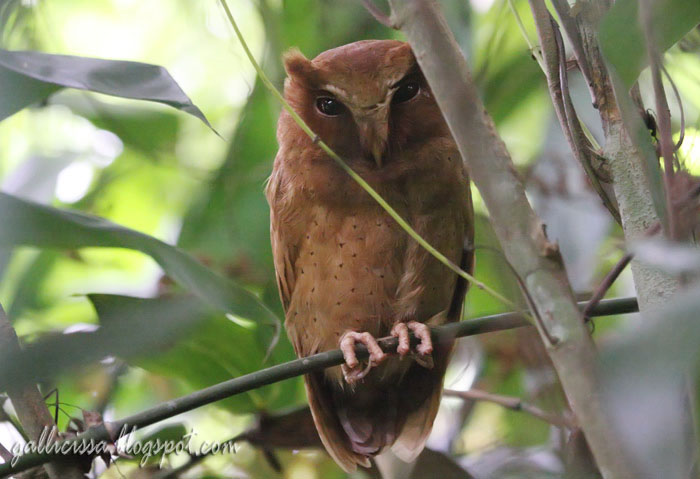
Serendib Scops Owl in a daytime roost
I guided a 14-day Absolute Birding trip with three birders from Scotland from 30 November–13 December, 2009. My clients were Val Wilson, who was the main organiser, and her birding buddies, Pauline Blair and David Clugston—all sharp birders. They were strictly focussed on watching birds and carried no cameras with the aim of photographing them. This gave them more opportunities to actually look for new birds, which boosted our trip list. Our final tally stood at 246 species seen including all thirty-three endemics currently recognised.

The endemic Serendib Scops Owl above, seen at a daytime roost at Sinharaja rain forest, was voted unanimously as the bird of the trip. There was no drama with other tough endemics: Sri Lanka Spurfowl, Sri Lanka Whistling Thrush, Sri Lanka Scaly Thrush and Sri Lanka Bush Warbler, and all of them afforded great views.

I got two lifers during this trip in the form of Isabelline Wheater at Yala and Hume’s Whitethroat at Bundala - both on the same day.

We had four Brown Wood Owls on this trip: one at Sinharaja at dusk, and three at a daytime roost at Surrey Estate, Welimada. The Sri Lanka Frogmouth below was seen at a daytime roost at Sinharaja, quite close to the track.

Our top mammalian highlight was this Leopard, seen resting in a tree at the Yala National Park. After finding it like that, we waited until it got up to move on; and I got this record shot then.

Leopard
Coming back to birds, we had a pair of White-naped Woodpeckers and rare migrants: White Wagtail and Citrine Wagtail at Udawalawe National Park. A Watercock gave good views at Pannegamuwa tank. A lone Eurasian Wigeon mixed with a party of Lesser Whistling-ducks was picked up by Dave at Deberawewa tank at Tissa. This bird is a rare visitor to southern Sri Lanka, and was the first time it has been reported during my southern birding tours. Dave also did extremely well to pick a distant Pomarine Scua and Brown Booby while sea-watching off Negombo on the last day. A nesting pair of Hill Munias was observed at Hakgala Botanical Gardens, where we also had brilliant views of the sought-after Himalayan special, Kashmir Flycatcher.

Several dragonflies were also seen on this trip. This Foggy-winged Twister obliged long enough to afford a photo opportunity at Tanamalwila (pronounced in Sinhala as Thanamalwila).

Foggy-winged Twister
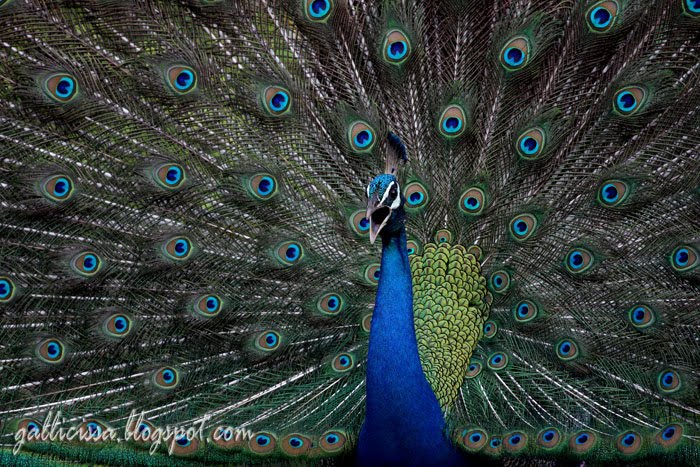
The Indian Peafowls were quite busy courting and we had plenty of displaying males, like this raunchy one, at Yala.

Indian Peafowl
This Curlew Sandpiper in summer plumage clearly stood out among its cousins in their paler grey winter drab plumages.

Curlew Sandpiper

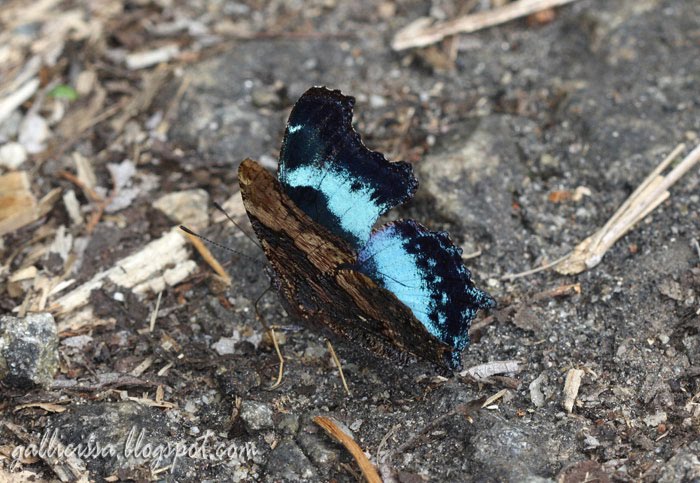
The Blue Admiral

The Blue Admiral
This was one of those butterflies that traumatised me as a lad, for when I saw it for the first time in an abandoned cocoa grove near Kandy, I refused to believe my eyes. It had been the last day of the school term (a half-holiday). I came home, dropped my satchel, took up my net and ran down to the cocoa grove to taste of the freedom. After about ten minutes of adjusting my eyes to the gloom, I noticed something silvery-blue and unfamiliar, lazily executing tight little circles in a rather wide beam of afternoon sunlight. Suddenly, I no longer heard the cicadas or the birds: just the noise of my racing heartbeat. I found myself making extravagant promises to my Creator in return for a fair chance at netting this magically unexpected, undreamed-of, butterfly. I watched it pirouette and glide, then a few quick flicks of the wings into the shadows where it was lost briefly and then back into the sunbeam for more pirouetting and flow gliding, like a tiny dancer in an enormous spot light. The slightest movement from me and it would flick away into the shadows. This went on for an agonising thirty or forty minutes, until it ventured too close to its solitary but very appreciative audience. How I bagged it, I know not, but I did. The specimen, a male is still with me somewhat rubbed, but precious beyond anything that mere lucre can buy.

—Bernard d’Abrera in ‘The Butterflies of Ceylon’ published in 1998.

This was photographed in the Knuckles Wilderness in Dec, 2008 while guiding Richard and Ann Bishop, Kenya on a 14-day Absolute Birding tour.

Sunday, 28 February 2010

Pied Kingfisher

This Pied Kingfisher (aka. Lesser Pied Kingfisher) Ceryle rudis was photographed during the Kudu 2010 Sri Lanka tour at the Dutch canal at Waikkal. It tolerated our close presence in a boat, and afforded nice photo opportunities, albeit in somewhat shaky circumstances. The male shown here is easy to tell apart from the female as it has a couple of black bands across the breast.

Lesser Pied KIngfisher
Pied Kingfisher male at the Dutch canal at Waikkal - 10 Jan, 2010

In contrast, the female has just one 'breast-band', which is broken in the middle.

The Pied Kingfisher has an interesting foraging technique, whereby they catch fish by hovering over water, often quite high up; and diving after a target is acquired. In doing so, they'd also descend in stages and hover in order to precisely locate the target before the final plunge.

In addition to this peculiar foraging technique, this species would also use a perch, like the above individual, to hunt prey in a more orthodox fashion.

Interestingly, the Pied Kingfisher is capable of devouring their prey in flight without necessarily returning to a perch for fine dining. Its hover and dive foraging technique, and the aforementioned attribute enable it to hunt in large expanses of water, lacking suitable sticks/rocks to perch.

Well, here's how it forages by means of hover and dive method.


On occasions when it has the luxury of using a perch to hunt, Pied Kingfisher would return to it after catching the prey. It then often beats its prey on the perch to first kill it, and to 'tenderise' it, before devouring it. I picked up the latter culinary technicality in Vickie Henderson's blog post about Belted Kingfisher, which is a North American cousin of this species.

Saturday, 27 February 2010

The Curtain Raiser

Did you know that at Lords’, the northwest side of the playing surface is some eight feet higher than the southeast side?

I didn’t, until I met Adrian Morgan, the assistant Head Groundsman of Lords'—the home of cricket. This was during a 3-day trip to Sinharaja ‘World Heritage’ rain forest last November. He was here with his partner Rose—a conservationistinvolved with London Peregrine Partnership. Both of them were very keen bird watchers, and were on their maiden visit to Sri Lanka. With for over thirty years of work experience at Lords', Adrian knew about cricket and cricketers like Jayalalithaa about acting and politics.

Dull-blue Flycatcher
The Sri Lankan endemic, Dull-blue Flycatcher perched on an English Oak at Hakgala Botanical Gardens, 29 Nov, 2009.

Yes, I gleaned plenty of inside stories about various cricketers!
FYI, Adrian has high regard for our skipper, Kumar Sangakkara.

Sri Lanka White-eye
The diminutive endemic, Sri Lanka White-eye at Hatton, at a police check-point.

This tour marked the curtain raiser of my winter 2009/2010 birding and wildlife tour season; and I did it from 25–27 November, 2009. Dazzled by the beauty of Sri Lankan birds, Adrian and Rose followed this with an unscheduled trip to Nuwara Eliya. This was in pursuit of highland endemics and specials. As I was scheduled to commence a 14-day ‘Absolute Birding’ trip with 3 British birders from 30 November, this was squeezed into the tight gap from 28–29 November, 2009. In this combined 4-day "special operation", we bagged twenty-six out of the thirty-three species of birds currently recognised as endemic to Sri Lanka (according to the Birds of South Asia by Pamela Rasmussen).

Coming to birding specifics, our top bird highlight at Sinharaja was seeing a Serendib Scops Owl in a daytime roost. Our highland species included Sri Lanka Whistling Thrush, Dull-blue Flycatcher, Sri Lanka White-eye, Yellow-eared Bulbul, and Sri Lanka Bush Warbler. We missed the montane endemic, Sri Lanka Wood Pigeon. My top site of it is Surrey Estate at Welimada, and we couldn't visit on this tour due to time constraints. However, we were lucky enough to get great views of the sought after western Himalayan delights: Kashmir Flycatcher and Pied Thrush at the Hakgala Botanical Gardens.
Related Posts with Thumbnails