had a very good time in their 4-day natural history trip with me last month. We are talking about Dave and Rose Ripley from Wales and their girls, Celyn and Ceinwen, aged 13 and 12. Before the tour, Dave wrote to me “My wife and I enjoy birdwatching, the children not so much...”. And he added “...they would certainly enjoy elephants, snakes, lizards, insects, and birds in moderation.”
We agreed to combine the best of dry and wet lowlands by visiting the Udawalawe National Park and the Sinharaja "World Heritage" rain forest, with more emphasis on the latter.
Our dry zone leg gave plenty of the hoped for Asian Elephants. With Elephants found year-round, in their 100s at times, Udawalawe was a sure bet for seeing them. Additionally we saw Wild Boar, Wild Buffalo, Spotted Deer, Hanuman Langur, Jackal and Ruddy Mongoose. Land monitor, Flap-shelled Terrapin and Mugger Crocodile were some of the reptiles seen at the first leg. With my 'oozing coolness' , I got the gals in my side and soon witnessed them actively getting involved in spotting birds, with enthusiastic support given by their parents. This resulted in us raking in nearly 100 species of birds on our day 01. These included Malabar Pied Hornbill, Lesser Adjutant, Grey-headed Fish Eagle, Blue-faced Malkoha, Sirkeer Malkoha, Pied Cuckoo, Plum-headed Parakeet, Crested Treeswift, Orange-breasted Green Pigeon, Sri Lanka Green Pigeon, Green Bee-eater, Barred Buttonquail (many), Indian Pitta and Indian Jungle Nightjar.
We also saw a large dragonfly named Elephant Emperor Anax indicus, which was my top highlight for day 01!
Our rain forest leg called for a different approach to get the girls involved – as it entailed exploring the forest on foot. I gave my Swarovski Binocsto Celyn, which she liked a lot.
And I taught young Ceinwen how to do macro-photography using a point and shoot digital camera, which kept her constantly lagging behind. Both girls were sharp-eyed and got involved actively spotting things, which made my job a lot easier. They proved very good companions to have on a rain forest walk. Ceinwen spotted this critter, which was barely 12 mm in length.
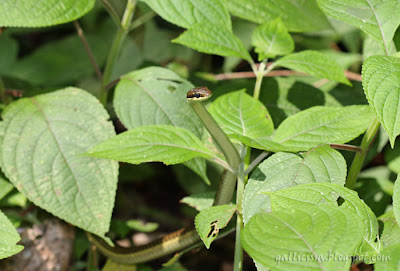
I was conveyed a joint communication by the girls that they’d love to see rain forest snakes. This request was met with enthusiastic support and we ended up seeing 9 snakes with 7 of them being found by yours truly. They belonged to 5 species out of which 3 were endemic. They were: Green Pit Viper Trimeresurus trigonocephalus One lazing individual was found by me in the undergrowth by the roadside. Heard the girls going "awesome". Green Whip Snake Ahaetulla nasuta – 2 individuals gave amazing views. Boiga barnesii– A couple of this scarce endemic was found by me in a courtship behaviour. They are called 'cat snakes' due to their vertically elliptical pupils similar to those found in cats. This is a smaller relative of the infamous Brown Tree Snake Boiga irregularis, which caused avian carnagealmost wiping out all the native birds of Guam, where RD is known to be working these days.
Barnes’ Cat Snake Common Bronzeback Tree Snake Dendrelaphis tristis - The individual that Ceinwen spotted first of this snake eluded me but this one that I found posed well for everybody. Sri Lanka Keelbacked Water SnakeXenochropis asperrimus – 2 individuals at the usual spot. Endemic.
Our birding specials included 2 animated Chestnut-backed Owlets – the first of which was spotted by Dave at dawn.
With several decent mixed-species bird flocks, we saw almost all the specials expected to be seen at Sinharaja such as Sri Lanka Blue Magpie, Red-faced Malkoha, Sri Lanka Scaly Thrush, Malabar Trogon, and Crimson-backed Flameback
We also saw a brooding male Sri Lanka Frogmouth in a nest built on a tree branch above a trail. Observing it in the scope we noticed a ready-to-fledge chick. The angle of light did not allow good photography. But you can click here, here and hereto see my previous photographs of this species.
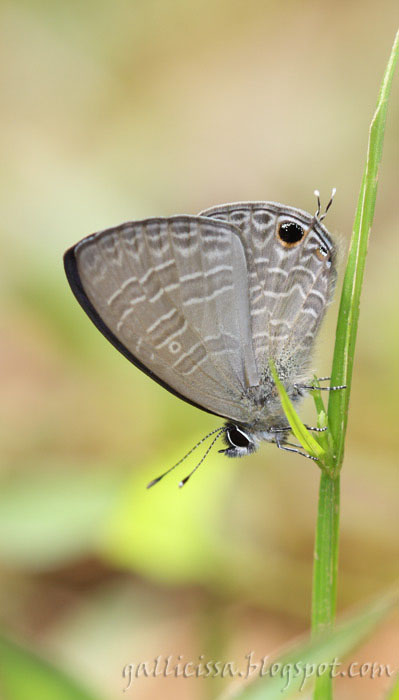
We saw plenty of beautiful butterflies, which included this Rounded 6-Lineblue Necaduba berenice ormistoni.
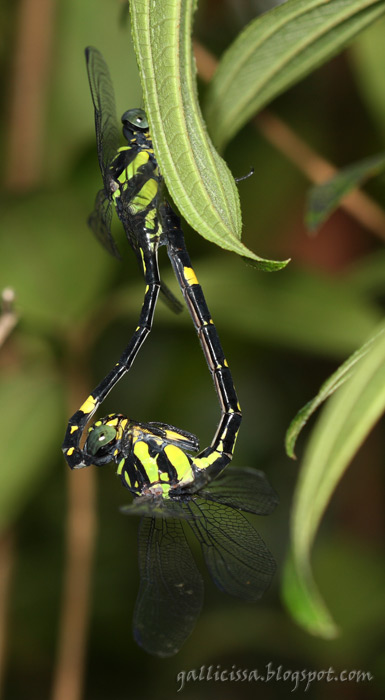
Dragonflies too were out in good numbers. My top highlight was this pair of Sri Lanka Sabretails Megalogomphus ceylonicus in wheel position. This was a dragonfly-lifer for me.
Additionally we saw Amber-winged Glider, Rapacious Flangetail, Dawn Dropwing, Spine-tailed Skimmer, Asian Pintail and Marsh Skimmer.
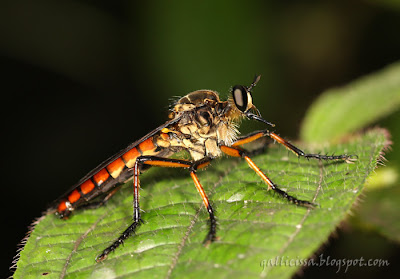
We saw three species of Robber flies and the best-looking one of them is shown below. The body length of this excluding limbs was about 6 cm as you can judge from scale of the Clidemia hirta leaf on which it is resting. It looked formidable enough to tackle even a Sabretail! We also saw plenty of amphibians. They'll have to wait for another post as this has already swollen a bit.
This Robber fly was captured by me at 3 times the life size in my garden. No tripod was used. I got a person to hold a sheet of A4 paper at the background to prevent it from being dark as in these pictures.
Sri Lanka is one of the best places to see the Blue WhaleBalaenoptera musculus—according to Marine Biologist Dr. Charles Anderson. He is based in Maldives since 1983 and his research on whales in the Indian Ocean led him to believe that Blue Whales should be present off the south coast of Sri Lanka in April—a hypothesis he confirmed with pelagic trips done in April 2007 and 2008. In the last of these trips, he has had Blue Whales on all 14-days he spent looking for them, with an average of 4.5 sightings per day!
Sri Lanka, as you may be aware, is a continental island, which had been connected to India for much of the geological past through epocs of lowered sea levels. The continental shelf that it sits on begins to slope after 3 nautical miles off Dondra in the southernmost tip of Sri Lanka, which is also the southernmost point of the whole of Indian subcontinent. Because of this oceanographical reality, ships plying between east and west have to circumnavigate Sri Lanka, passing by Dondra instead of cutting across the northern Sri Lanka, where seas are shallower.
According Dr. Anderson, the cetaceans migrating between feeding areas in the east and west of the Indian Ocean also take the same route as the ships. This, according to him, happens between December to April—with clear peaks in December and April.
With this beging the state of affairs Peter Kaestner, who at present is the world’s 7th ranked birder, came to Sri Lanka on a 9-day holiday with his family in early April—with wathcing the Blue Whales being central element of the tour. According to the latest numbers listed in Surbirds.com, Peter has got a whopping 8,180 species of birds, out of 10,000 or species found in the world.
In 1989, he was fortunate to discover a bird species entirely new to science, from Columbia, which came to be known as Cundimarca Antpitta Grallaria kaestneri.
This was Peter’s second trip with me. The first was in Sep, 2007 when he came on 3-day weekend birding trip wanting to clean up 8 Sri Lankan endemic birds missing in his world bird list. Before this, he had been on a solo birding visit to Sri Lanka in 1981—round about the time when I was getting ready to go to the kindergarten!
In the 2007 trip, we managed to see 7 of those 8 targets: Serendib Scops Owl, Ashy-headed Laughingthrush, Red-faced Malkoha, Sri Lanka Spurfowl, Green-billed Coucal, Sri Lanka Bush Warbler and Sri Lanka Whistling Thrush—the toughest endemics, with two being in the “endangered” club.
The one we missed out was the not-so-elusive Brown-capped Babbler. This miss was because some of those rare species we sought were found in two ecological zones – the lowland wet zone and highland wet zone respectively, and because some of them being rare birds didn't show up easily, demanding more time.
Oh! And because, we encountered foul weather throughout in this particular tour due to the period of travel coinciding with a monsoonal high.
We commenced our 2009 trip in the southeastern Sri Lanka with two game drives to the spectacular Yala National Park hoping to go 1-nil with the Leopard. Unfortunately, we drew a blank with this big cat this time.
But, to make amends, I managed to find the Brown-capped Babbler!
Next came the pelagic leg—the most important one—of the trip to see our main quarry, the Blue Whale.
Having started from Mirissa at 7.15 a.m., on 5 April, we had the first evidence of our first Blue Whale after travelling 4 nautical miles, towards—well—Antarctica. It was a distant but unmistakable view of a characteristic high vertical blow.
Tickable views were obtained around 5.5 nautical miles off. We had at least 4 good sightings of just an individual after we reached the hotspot and started looking intently. We knew it was the same one as it had a characteristic white marking in the tail, which showed up clearing with each surfacing. Here's a crude video of our Blue Whale. I should stress the word: crude.
At one point it was seen as close as 20-30m from our boat as it surfaced to breathe, almost taking our breath away. It performed well for us as well as for people aboard 3 other boats that converged at this hotspot for the same purpose. One of those was full of familiar faces with members of a local nature club. They, at one point, were pretty close. By the way, the terra firma you see in the picture below is Sri Lanka, just in case if you are wondering whether it is Antarctica.
I did not take my dSLR for this trip. That's because all my lenses are macro types. And the Blue Whale was not really a macro subject.
So, all these pictures shared here were taken by my trusty Panasonic Lumix FZ-18, which is also the model that Peter currently uses as his carry on camera. I bought mine after seeing this amazing shot he got by photographing the Serendib Scops Owl at night (using an older Lumix version).
A day trip we did following this to Sinharaja rain forest to see Sri Lanka Scaly Thrush and Crimson-backed Flameback was successful. The former responded aggressively to my rendition of its contact call by flying straight towards my head, indicating it may be busy nesting. These two birds together with Sri Lanka Woodshrike and Common Hawk Cuckoo seen on this tour by Peter went as ‘bank birds’—ones which do not get added to his bird list immediately as the ‘Clements' checklist’ that he uses to keep track of birds species seen, has not yet accepted these recent taxonomical splits/potential spits as valid species yet; and now that he has seen them, they would increase his tally once they are accepted as valid species in the future.
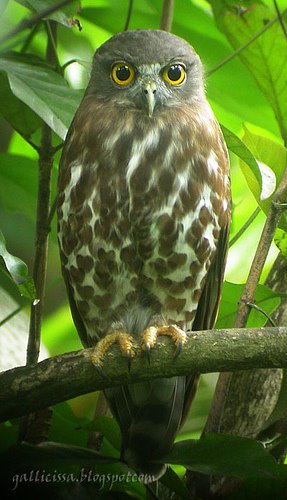
I nearly forgot, Peter became the first birder to see my garden's roosting Brown Hawk Owls.
Balcony journal - Red dwarf honey bees
-
*Jul 2nd/3rd 2026 - Red dwarf honey bees*
My ajwain pot had some interesting visitors a month ago for a few days.
They have not come back (or I should ...
Not A Chicken Of The Sea
-
One type of bird I don't see too often are rails. They're usually
secretive, maybe just popping out of a marshy area for a quick look around
before disap...
Europe, But Not As We Know It.
-
Many years ago and after learning of the wholesale slaughter and/or capture
of migratory birds through the island of Malta I vowed to never ever go
there. ...
Jardín Botánico Viera y Clavijo & El Puertillo
-
We had a car for our week in Gran Canaria and this was our first trip away
from Maspalomas. Really lovely and extensive gardens in the north of the
island ...
Change of address
-
Just putting this here in case anyone is still subscribed. Due to issues
with hosting requirements, the Variety of Life website has changed its
address. ...
BirdFinder – A wordy puzzle for bird nerds
-
BirdFinder, a new puzzle by The Green Ogre, is exactly what you need to
spend time away from time-wasting online habits and apps that do the
thinking for you
Rundum Highland, Tenom
-
9th - 13th January 2024
Bird survey with the Sabah Birdwatchers Association at Rundum Highland,
revealed some of the exciting mixture of species from ...
Loose Feathers #800
-
*White-crowned Sparrow / Photo by Tom Koerner/USFWS*
Birds and birding news
- Tomorrow is NJ Audubon's World Series of Birding, a big day tournament ...
Juvenile Hummingbird Behavior
-
Young hummingbirds leave the nest full of curiousity and uncertainty.
They have to figure things out quickly and innocence is short-lived, but
their initi...
Last Eagles of 2018............
-
Today was probably my last trip up to Yakumo this calendar year...........
We were showing Mike and Carrie the eagles.
They are visiting Japan from H...
October in the garden
-
[image: The Urban Gardener | Dendrobium Orchid]
Come October and a gardener's mind turns to things colourful and bountiful.
My garden is flourishing in a g...
It's Been Too Long
-
The Waldoboro Town Landing
It's been a very long time since I have written a blogpost, and of course
so much has happened. Suffice it to say that we hav...
Florida Scrub-jay
-
[image: Florida Scrub-jay]
The Florida Scrub-jay is a rather unique bird. This member of the Corvidae
family is found only in central Florida. It is the on...
-
Some birds are just simply very hard to photograph. It takes a lot of time,
patience and a whole lot of luck. Having experienced all the elements, I
learn...
Why I otter.....
-
I'm guessing I'm the last person seriously interested in british mammals to
get around to visiting the norfolk town with otters gambolling through the
rive...
This Last Year
-
On Father's Day, 2011, Geoff and I came to the conclusion that we didn't
want to be married anymore.
We cried, we talked. We asked ourselves, "What happe...
Photo of the Week (10/03/2012): Safety Stop
-
For the beginner diver this is one of the most discomfiting times of a
dive, the safety stop, 3 minutes at 5 meters with the aim of eliminating
microbubb...
Painted Redstart in Ocean Springs, Mississippi!
-
On Jan. 5, Nancy Madden found a *Painted Redstart* just east of Ocean
Springs, Mississippi, on the Jackson County Christmas Bird Count. The bird
has been...
Twitching a rarity
-
Week 40 - 08 October 2011, Pivot Fields
There is nothing worse than getting news of a first and national rarity
whilst you are away on a business trip, so...
Diamond Desert
-
I stayed late after the IBCM conference to go out and see springtime in the
desert. I got to spend a delightful day hiking and insect watching out by
Dese...
Common Kingfisher - Thalangama, Sri Lanka
-
Common Kingfisher photographed at Thalangama this morning. The bird was far
away and I had to crop the image a fair bit. It was pretty quiet from a
bi...
I Want To Be A Nationalist
-
Whichever direction I glance in it seems that Nationalism is on the rise.
Be it Sinhala Buddhist Nationalism over your way, the good old US Trump
flavoure...
Fashion that doesn't bleed!
-
Been a very very long time since I wrote something on the blog... :)
But moving and being busy doesn't really help. So becoming vegetarian
(again) was...


 Boiga barnesii– A couple of this scarce endemic was found by me in a courtship behaviour. They are called 'cat snakes' due to their vertically elliptical pupils similar to those found in cats. This is a smaller relative of the infamous Brown Tree Snake Boiga irregularis, which caused avian carnage almost wiping out all the native birds of Guam, where RD is known to be working these days.

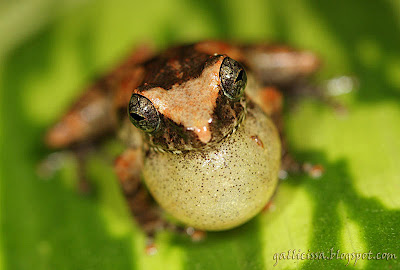
 We also saw plenty of amphibians. They'll have to wait for another post as this has already swollen a bit.


 A related post: Finding lifers for Peter Kaestner