By Amila Salgado
Abstract
Acute Paucity of Bird Posts Syndrome (APOBPS) is described for the first time. Notes on its diagnosis, complications, implications and possible ramifications are discussed in relation to an affected bird blog in Sri Lanka. Results follow a prospective observational study over one year to formally characterise this condition. A possible treatment is suggested in relation to the Sri Lankan case, based on positive results seen in pre-clinical evaluations and stuff like that.
 Plate 1 A Positive symptom: This is a Large fly (Order: Diptera) in my home garden 11 Sep, 2009.
Keywords:
Plate 1 A Positive symptom: This is a Large fly (Order: Diptera) in my home garden 11 Sep, 2009.
Keywords: digiscoping, digiscopy, blogosphere, birding, APOBPS, blog, canon 100-400 f4.5-5.6L Lens.
Introduction.
A bird blog is an online journal of bird and birding related stuff of a birder (Salgado, 2007). Bird blogs that strictly discuss birds and birding related matters are essentially rare these days. This is evident from the fact that even the top bird bloggers leaving room to discuss non-birding matters in their blogs (
Bergin et al. 2007).
Therefore, the modern attitude seems to suggest that a certain amount of non-birding content is not too unhealthy for a bird blog after all. This seems reasonable given the diversity of "other things" a birder confronts during birding explorations.
However, an recent obserations have have shown that certain bird blogs seem to constantly deviate from posting bird and birding content, leading to the condition identified here for the first time as
Acute Paucity of Bird Posts Syndrome (APOBPS). It is characterised by gradual drop in bird posts in blogs that are portrayed to the outside world primarily as bird blogs.
Symptoms and diagnosis.
You open a bird blog and see a frigging dragonfly first, or such thingamajig that have absolutely nothing to do with birds.
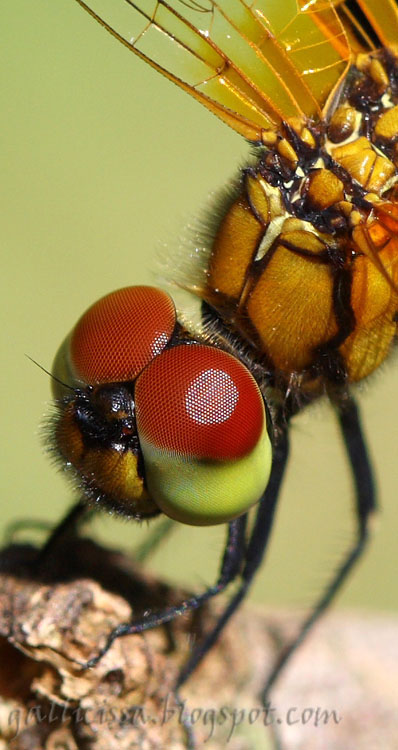 Plate 2: A positively positive symptom: Elusive Adjutant Aethriamanta brevipennis brevipennis young male in my home garden, Kaduwela, Sri Lanka.
Other such deviations include posts dedicated to grasshoppers, garden spiders, beetles, shrub frogs, butterflies, snakes, stick insects, robberflies, Leopards and even Blue Whales, for heaven's sake!
 Plate 3:
 An advanced symptom: Robber fly (Order: Diptera) feeding on a tiny fly (Order: Diptera) in my home garden, Kaduwela, Sri Lanka.
Basically, any bird blog that has less than 65 % of bird and birding-related posts can be taken as APOBPS positive cases.
At the onset of the APOBPS, bird blogs show a high frequency of recurring theme posts such as Macro Monday (
Salgado, 2009b), Wordless Wednesday (
Ciccone, 2009b) and Sky Watch Friday (
Tabib, 2009) in an obsessive compulsive sort of way, with very little or no birding content. Note: the latter used to be called Tabib's Bird Blog when I discovered it.
In extreme cases affected bird blogs carry dedicated non-bird posts in serial-post style (
Salgado, 2009c).
Initial investigations confirm the prevalence of APOBPS symptoms increasingly in bird blogs that are linked with affected blogs (
Ciccone, 2009a), raising new fears whether APOBPS could grow into pandemic propotions. Studies are currenly under way to ascertain this.
Ramifications.
If untreated, APOBPS results in an affected bird blog to transmogrify into one other than a bird blog., i.e. a natural history blog. Its overall implications and visitor traffic needs to be assessed further.
A prospective observational study (
or something like that).
Digiscopy has been my preferred method of photographing birds since time immemorial. That's like since 2004. It basically involves the attachment of a digital camera to the eyepiece of a spotting scope, using a homemade adapter or mount and shooting through the lens of the spotting scope to take cracking photographs (
Poh, 1999).
This in my case is currently achieved through a Kowa TSN 823 telescope (with 20-60 x zoom eye-piece) with Nikon Coolpix 5100 camera—both married together with custom-made adapters.
So in other words, if I have a bird to photograph in the wild now, I would reach for my digiscoping gear rather than my point and shoot: Panasonic Lumix FZ-18 camera, although the latter has the capacity for achieving decent results as shown in Plate 4.
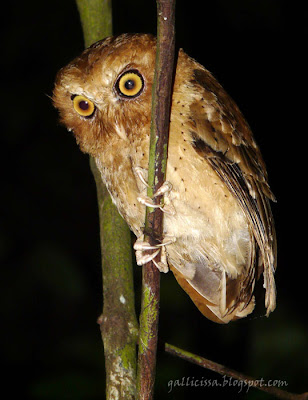 Plate 4 Serendib Scops Owl Otus thilohoffmani photographed at night time. Aug, 2008.
Over the years, I have taken some decent shots by means of digiscoping (Plate 5 and Plate 6 - using Nikon Coolpix 4500). Some of them have featured in articles authored and co-authored by me (
Salgado, 2006 and
Goodale et al. 2008) and authored by others (Lord, 2007 and Ritschard and Schweizer, 2007) in journals and magazines, local and overseas.
 Plate 5. A Red-faced Malkoha Phaenicophaeus pyrrhocephalus with a Giant stick insect Phobaeticus hypharpax prey in the beak at Sinharaja 'World Heritage' rain forest, Sri Lanka. This image was used in an article by me in Forktail - The Journal of Asian Ornithology.
 Plate 6. Chestnut-backed Owlet Glaucidium castanononum Digiscoped in Jan 2007 at Sinharaja 'World Heritage' Rain forest. This image was used by Ritschard and Schweizer in 2007 for an article in BirdingAsia 7.
However, as of recently for multitude of reasons I have not been motivated enough to do digiscoping of birds much. In all honesty, I would have loved to have photographed some of those birds seen. But, I simply have lacked the inner drive, the hunger, the killer instinct to bag a photograph of a bird by means of digiscoping.
This accounts for the drought of bird images and bird posts, which has gradually pushed this blog to a APOBPS postive one.
Let me be honest. Birds were my first love—the very reason why I fell in love with nature. It will always be like that. So I always like to portray myself as a birder although with time I have acquired interests in natural history. Okay, without getting too emo, let’s dig deep to the reasons, which have led to APOBPS in Gallicissa one by one.
1. Realisation that digiscoping and 'point and shoots' cannot achieve crisp images consistently as one can using dSLR photography.
Since converting to dSLR (with the aim of doing macro photography) in Sep, 2008, I have been convinced of the sheer capabilities and merits of dSLR photography. In simple, dSLR photography has raised my standards and expectations as a photographer and has opened my eyes to understanding photography a bit better.
After comparing my bird shots with stunning bird images taken by bird bloggers like Stuart Price at
Hakodate Birding, I have increasingly realised that digiscoping cannot achieve the same high standards as through dSLR photography.
Lately, this has discouraged me from spending a lot of time over digiscoping birds.
2. Limitations of digiscoping.
During a shorebird trip to Chilaw last month, we encountered a Brown Noddy, a rare seabird that visits the Sri Lankan coasts in bad weather. It was flying low over the rough seas, quite close to the shore. I would have loved to have got a record shot of this rarity; however, such constantly moving subjects are nearly impossible to capture
crisply through digiscoping for noodys like us. This explains why I have got
no flight shots of birds on this blog.
But take a look at what
Stu has achieved below of a bird in flight.
 Plate 7. Eatern Curlew Numenius madagascariensis in flight by Stuart Price.
I seriously doubt any digiscoper can match the sharpness of a bird in flight like that. Or for that matter, stills like
this .
3. Enjoying bird watching in its purest sense and not bothering to blog about it.
Since getting my
Swarovski ELs (Salgado, 2009a), I think have become more of a watcher than a shooter in my birding habits (which I deem as healthy for me as a birder)
.
Gallicissa is not a photo blog
sensu stricto. However, I do like to associate a photo or two with my posts, which explains why there is hardly any text-only posts in this blog. For some reason, I do not feel like doing text-only blog posts. So, with
no new bird images at hand, my bird blogging has suffered a considerable setback over the past year or so. Perhaps my attitude towards doing text-only blog posts may change in the future as I mature as a writer, say as
Rhythmic Diaspora who hardly includes images in his posts, but simply uses his spellbinding prose and sheer class to create vivid mental images.
Treatment.
Pre-clinial evaluaions have shown the
Canon EF 100-400mm Lens (Plate 8) to be a very effective remedy to curb APOBPS. However, with a price tag of over
$1,650 $1,700 this treatment remains quite steep. However, as things stand, it may be the only cure for the affected Sri Lankan blog in question, until future evaluations show otherwise.
 Plate 8 Canon EF 100-400mm f4.5-5.6L IS USM Telephoto Zoom Lens.
Conclusion.
Plate 8 Canon EF 100-400mm f4.5-5.6L IS USM Telephoto Zoom Lens.
Conclusion.
Early diagnosis, timely treatment and rigorous field birding may be the only cure for APOBPS positive bird blogs. With proper care they can bounce back to normalcy, of course leaving room for the odd non-birding post or two. Or three.
Acknowledgements.
I would like to thank
Stu for lending his image and for his continuous encouragement to seek treatment. As always I am very thankful for all the readers and commenters. Normal service will resume very soon.
References.
Bergin, M., Moores, C. and Finger, C. (2007)
About 10000 Birds.
10,000birds.com.
Ciccione, C. (2009a)
Twelve-spotted Skipper.
Picus Blog Aug, 2009.
Ciccione, C. (2009b)
Wordless Wednesday.
Picus Blog Sep, 2009.
Goodale, E., Salgado, A., and Kotagama, S.W. (2008).
Birds of a different feather.
Natural History 117:24-28.
Lord, M. (2007)
Pioneers of Asian Ornithology: Colonel W. Vincent Legge.
BirdingASIA 8: 84-89.
Poh, L. (1999)
What is Digiscoping?
Laurence Poh Digiscoping.
Redzlan, A. R. (2009)
Belalang kunyit and sky.
Tabib's Bird Blog Sep, 2009.
Ritschard, M and Schweizer, M. (2007)
Identification of Asian Glaucidium owlets.
BirdingAsia 7:39-47.
Salgado, A. (2006)
Some observations on the diet of Red-faced Malkoha Phaenicophaeus pyrrhocephalus in Sri Lanka.
Forktail 22:122-123.
Salgado, A. (2007) What is a Bird Blog?
Gallicissa. In a comment somewhere, 2007
Salgado, A. (2009a)
What is your binocular? Gallicissa Apr, 2009.
Salgado, A. (2009b)
Macro Monday Gallicissa July, 2009.
Salgado, A. (2009c)
Dragons in my garden Part 3 Gallcissa Aug, 2009
Citation: Salgado, A. (2009) Description of Acute Paucity of Bird Posts Syndrome (APOBPS), its diagnosis, treatment and stuff like that in relation to a bird blog in Sri Lanka. Gallicissa, September 2009.